what did harding mean by a return to normalcy
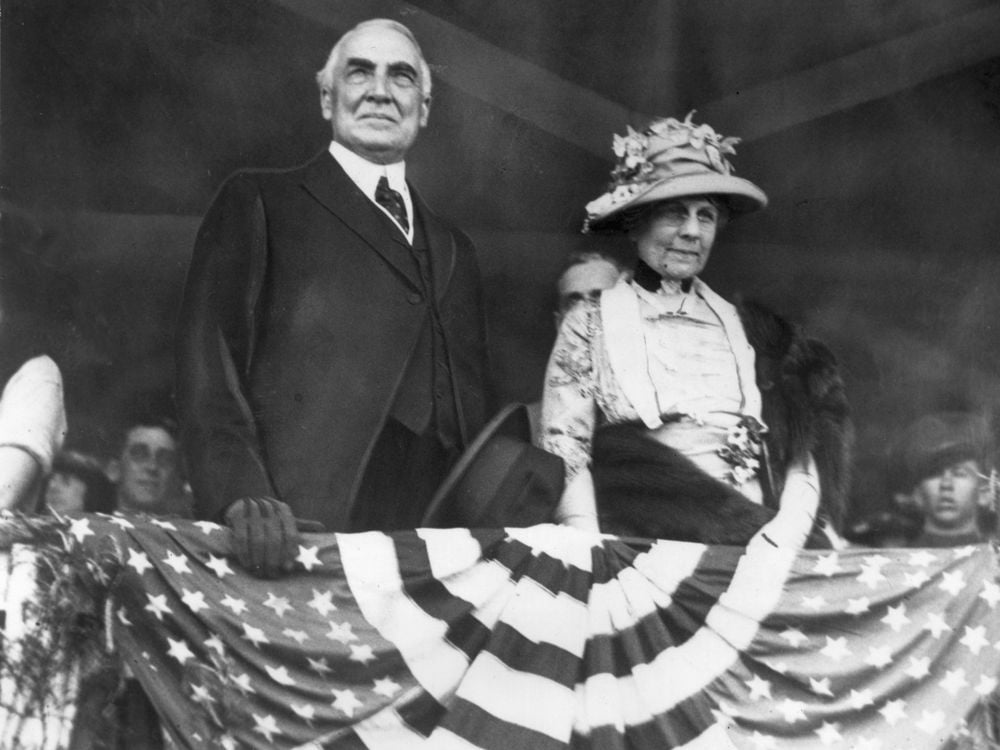
What is normalcy? And what does information technology mean when we tell ourselves that we want to get back to it?
When American historians hear talk of "normalcy," they think of Warren Thousand. Harding. Harding did not invent normalcy. Non the give-and-take, nor the state of being. But he benefited from the appeal of both.
Elected president in 1920, Harding campaigned to put a keel beneath a nation buffeted by world state of war likewise as the long and deadly 1918-1919 influenza pandemic. But finding the language for this was a struggle. Harding's inept speeches saddled him with too many words—making "promise" and "inspiration" fight for animate space.
But in a speech Harding gave in Boston in May 1920, he managed to convey a text that would be abnormally memorable.
First, Harding defined the problem of perspective, created by war and diseases. "In that location isn't anything the matter with world civilisation, except that humanity is viewing it through a vision impaired in a cataclysmal state of war," he began. "Poise has been disturbed, and nerves have been racked, and fever has rendered men irrational."
And then Harding offered the cure: "America'south nowadays need is not heroics but healing; not nostrums but normalcy." It might have been simpler to end information technology at that place, but normalcy was just the starting time in a series of antonyms that Harding suggested, expressing his goals in the negative: "Not revolution merely restoration; not agitation but adjustment; not surgery just serenity; not the dramatic but the dispassionate; not experiment but equipoise; not submergence in internationality just sustainment in triumphant nationality."
What did all that mean and then, and what does it mean at present? Let'due south set aside the question of how heroics and healing play as opposites in Harding'south speechifying. (We tin can clearly recognize how incorrect that rhetorical sleight of hand is when the heroism of the healers amongst us is so obvious in the world today.) Elect me, Harding promised, and he would take America dorsum to a bucolic pre-war, pre-pandemic time, a time of serenity. Mythic though it was, the vision worked. He won, in one of the largest political landslides in American history.
Simply history didn't stop there. Neither Harding nor normalcy would succeed. These failures, considered exactly a century afterward, agree lessons for those who seek restoration in our time of fear, disease and death.
What Harding sought 100 years ago has much in mutual with what many of united states of america say we seek today, and tomorrow, when the pandemic recedes. We want our lives back.
We want to get abroad from the volatile and frightening economics of pandemic, to something that feels, well, normal. And then did Harding. "If we put an cease to imitation economics which lure humanity to utter anarchy, ours volition be the commanding example of world leadership today," he pledged in that same speech.
Merely Harding-style restoration of economic system meant, for many, freewheeling consumption and giddy speculation. As the stock market and the nation's cities, began to roar in the exciting heedlessness of the Jazz Age, nary a circumspection was raised—except by the most astute observers.
Lack of regulation was a virtue to Harding, a balm afterwards all the rules and restrictions of war and disease. "The world needs to be reminded that all man ills are not curable by legislation," Harding had said, again in the aforementioned speech, "and that quantity of statutory enactment and excess of government offer no substitute for quality of citizenship."
Normalcy and restoration, to us as to Warren Harding, means and meant the return of a status quo of safe. Tin can't our terrible vulnerability be ended? The Roaring Twenties might have been fun, but it left those who weren't white or privileged more vulnerable to the tilt-a-whirl economy of the era. There was no net to grab them, and economical growth had no backstop or safety mechanism.
Harding led to Coolidge; Coolidge led to Hoover. It would take the Smashing Depression and Franklin D. Roosevelt'southward anything-only-normal presidency to create the social protections of the New Deal.
As we now contemplate what a render to normal will look similar, nosotros demand to face whether it will but shore up old unfairness and maintain a ripped safety net, leaving the ill, the uninsured, the homeless, the unemployed, and the furloughed to more often than not fend for themselves.
Harding besides promised a render to a more normal politics and a restored government "nether which a citizenship seeks what it may exercise for the regime rather than what the government may do for individuals," every bit he said in Boston. "No authorities," he added, "is worthy of the name which is directed by influence on the ane hand, or moved by intimidation on the other." It is depressing to see this, today, as a lofty appetite rather than a statement of what ought to exist obvious.
Good government aims and claims all the same, Harding would ultimately be known by and large for the criminality that occurred in his administration. The Teapot Dome scandal was the highest level of government lawbreaking before Watergate, and it all took place correct under his olfactory organ, inside his cabinet. The scandal—which involved leases to pump oil in California and at the Teapot Dome in Wyoming—put men in prison but, more chiefly, crumpled people's faith in leaders and regime.
Today, we look backward, to technological changes of the past, and wish for greater and faster innovation. In Harding's time, radio and communications technologies arrived with great promises of easier and cheaper connectedness, much as Zoom suggests new ways of being together now. But by the finish of the decade—and from then on—the technology enabled a moving ridge of populist demagogues who saw the gamble for audience and influence both, and took information technology. Where will the technologies that hope us community today pb u.s., if we're not sufficiently wary of them?
It's hitting how well Harding recognized the means that war and disease had exposed America's issues with equality. To his credit, he advanced plans for racial equity, but they foundered. And in retrospect it seems obvious that getting back to normalcy for some Americans meant keeping the colour line sharply drawn. Similarly, today COVID shows u.s.a. the inequalities we considered "normal" only three months agone, and demonstrates how hands we labeled some workers essential and some not—and how those labels are resulting in higher death rates.
For Harding, normalcy and restoration besides meant a retreat from the world, and from seeking to end war elsewhere, and then that we could recollect of America first. "Let united states of america end to consider that placidity at abode is more precious than peace abroad," he said in that same speech. But retreat did non spare the states or spare the world, as the 1920s saw forces ascension in Europe and Asia that would draw the Usa into a 2nd World State of war.
The lesson from Harding's time is that "going back to normal," is not condom; it'south actually unsafe.
In that long list of sober virtues from that May 1920 voice communication, Warren Harding also offered "equipoise," which is hardly a conventional political promise. Equipoise—divers past Merriam-Webster as a state of equilibrium— may have its attractions to people recovering from years of death. But equilibrium, and the return to a status quo at the expense of experimentation, too means giving in to passivity.
As we call back alee, we can exercise improve. Let's put normalcy at to the lowest degree off to the side, as we effort to find our way out of all this.
William Deverell is a professor of history at USC and the director of the Huntington-USC Institute on California and the West.
gonzalezhinem1983.blogspot.com
Source: https://www.smithsonianmag.com/history/warren-harding-back-to-normalcy-after-1918-pandemic-180974911/
0 Response to "what did harding mean by a return to normalcy"
Post a Comment